

 Reading by Cylin · Ages 3 to 18
From the first sounds to the words of the SAT
Phonics teaches the relationship between letters and sounds, so a child can read a word they have never seen. Vocabulary teaches what words mean, so the reading makes sense, and keeps going for as long as there are new words to learn.


Two different jobs
Phonics is decoding. 92 lessons teach one letter–sound at a time, blend sounds into words, build and spell words, and read sentences and stories made only from the sounds already taught. A grown-up sits nearby to hear the reading. Ages 3 to 9, in beta.
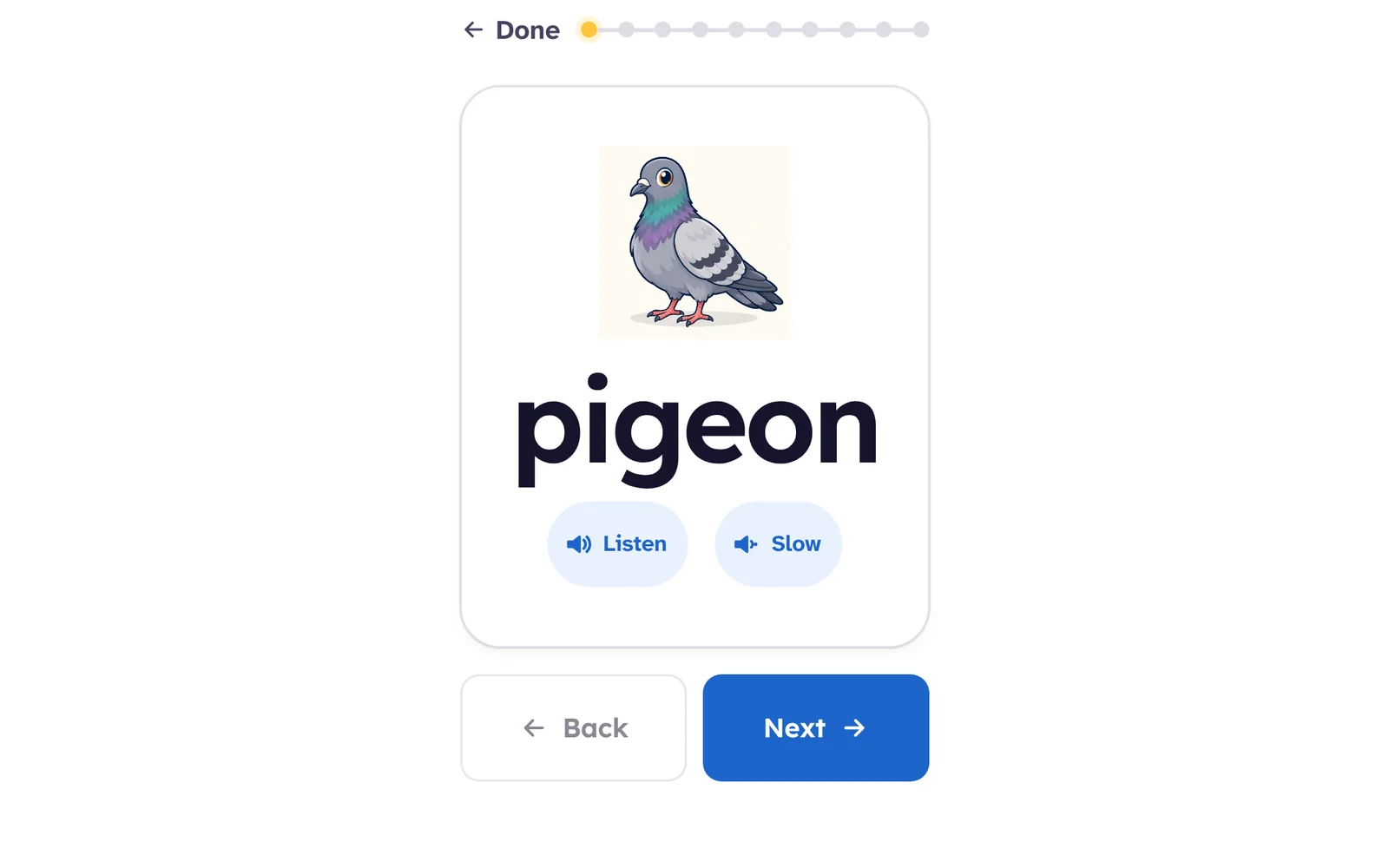
Vocabulary is meaning. A daily journey through 10,090 words in eight levels, each with a picture where one helps, a sound, a meaning and a sentence, learned through thirteen kinds of question, with reviews that aim to come just before they would be forgotten. Ages 4 to 18.
They meet in the middle: a child who is finishing Phonics is ready for Vocabulary’s first words, and both report to the Hub in their own words.
What they have in common
Short, daily, and kind. Sessions of five to eighteen minutes by age. No timers, no streaks to protect, no leaderboards. A miss shows the answer and explains it.
Nothing recorded. Neither app uses the microphone. Nothing a child types is stored or shown to anyone.
Honest about what they know. Phonics reports skills secure and words read. Vocabulary reports words remembered after a break, and shows its level estimate with its uncertainty rather than as a grade.