

Vocabularyby Cylin
A daily word journey that grows with your child, from first words to the vocabulary of the SAT. Each word comes with a meaning, a sound and a sentence, and the app aims to bring it back just before it would be forgotten.
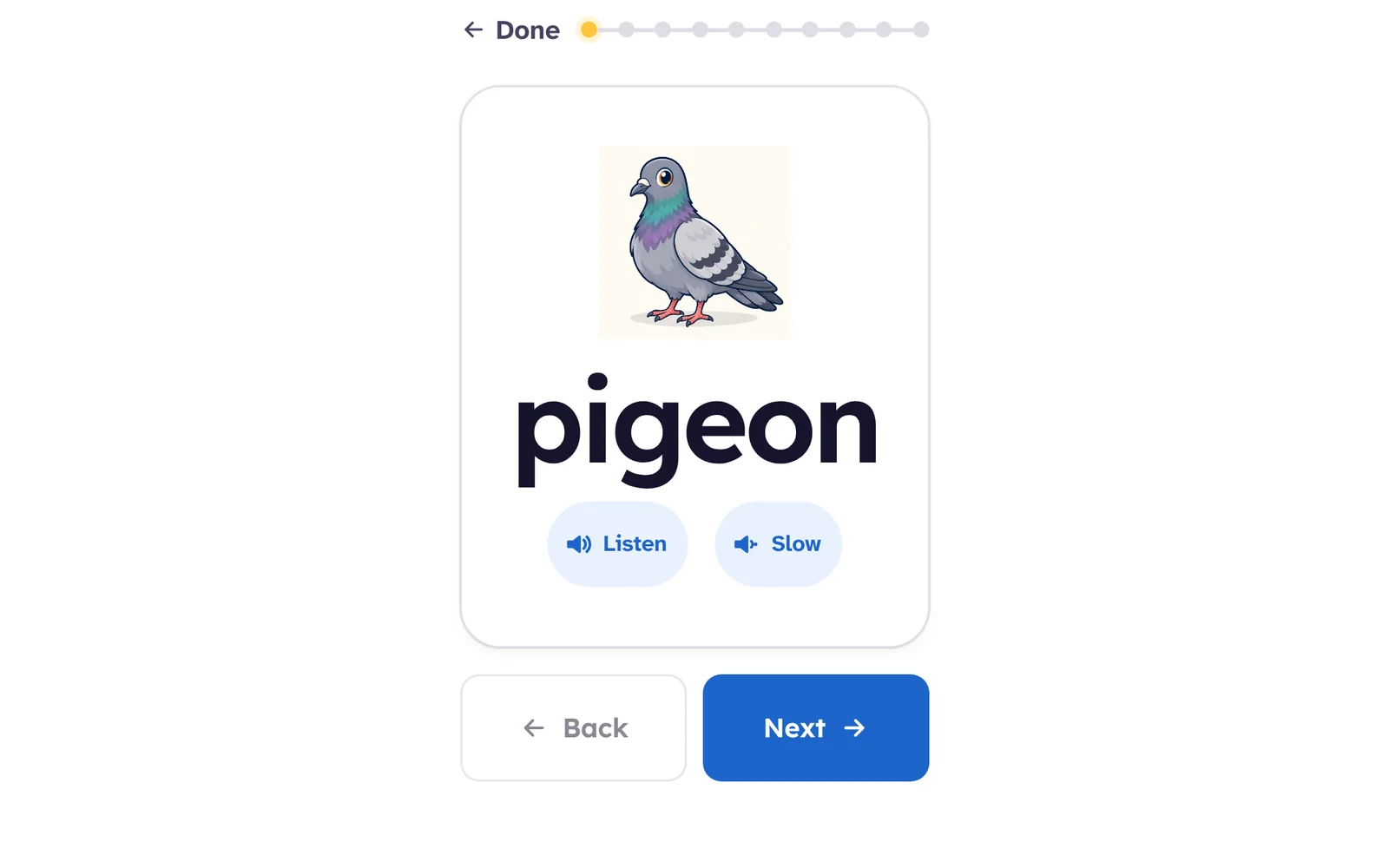
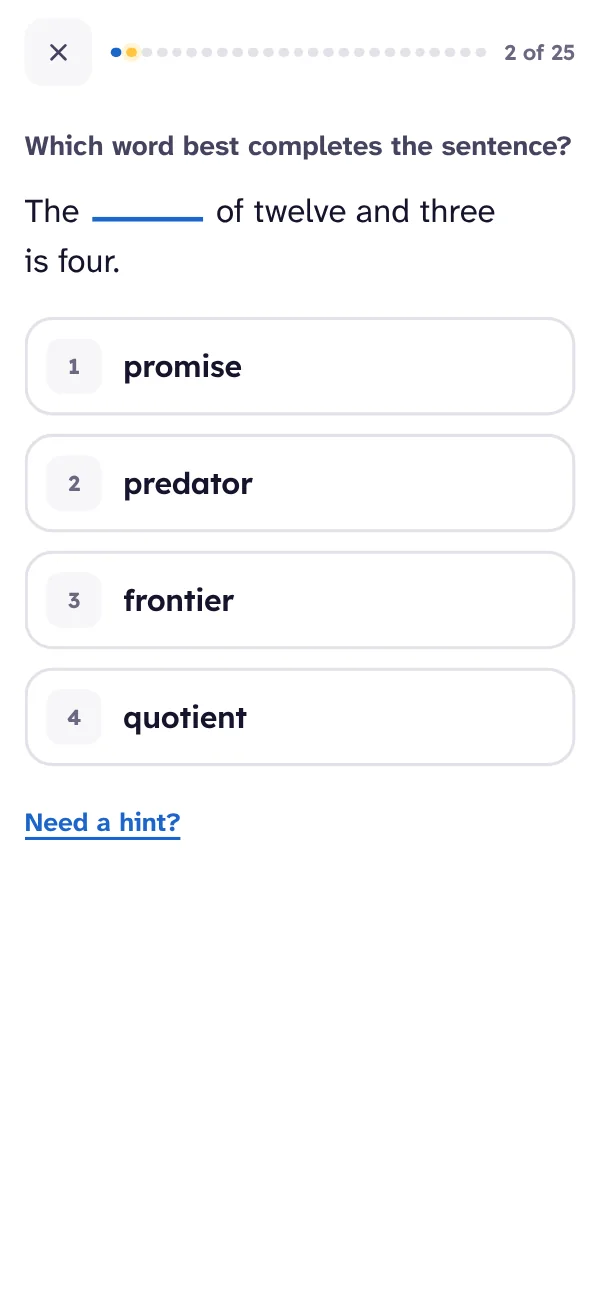
Every word has a meaning, a sound and a sentence
- 10,090 words in eight levels, from cat and happy to ubiquitous and perspicacious. Each has a child’s definition, a fuller one, two example sentences and the word read aloud; many have a picture, and older students meet word parts, roots and synonyms.
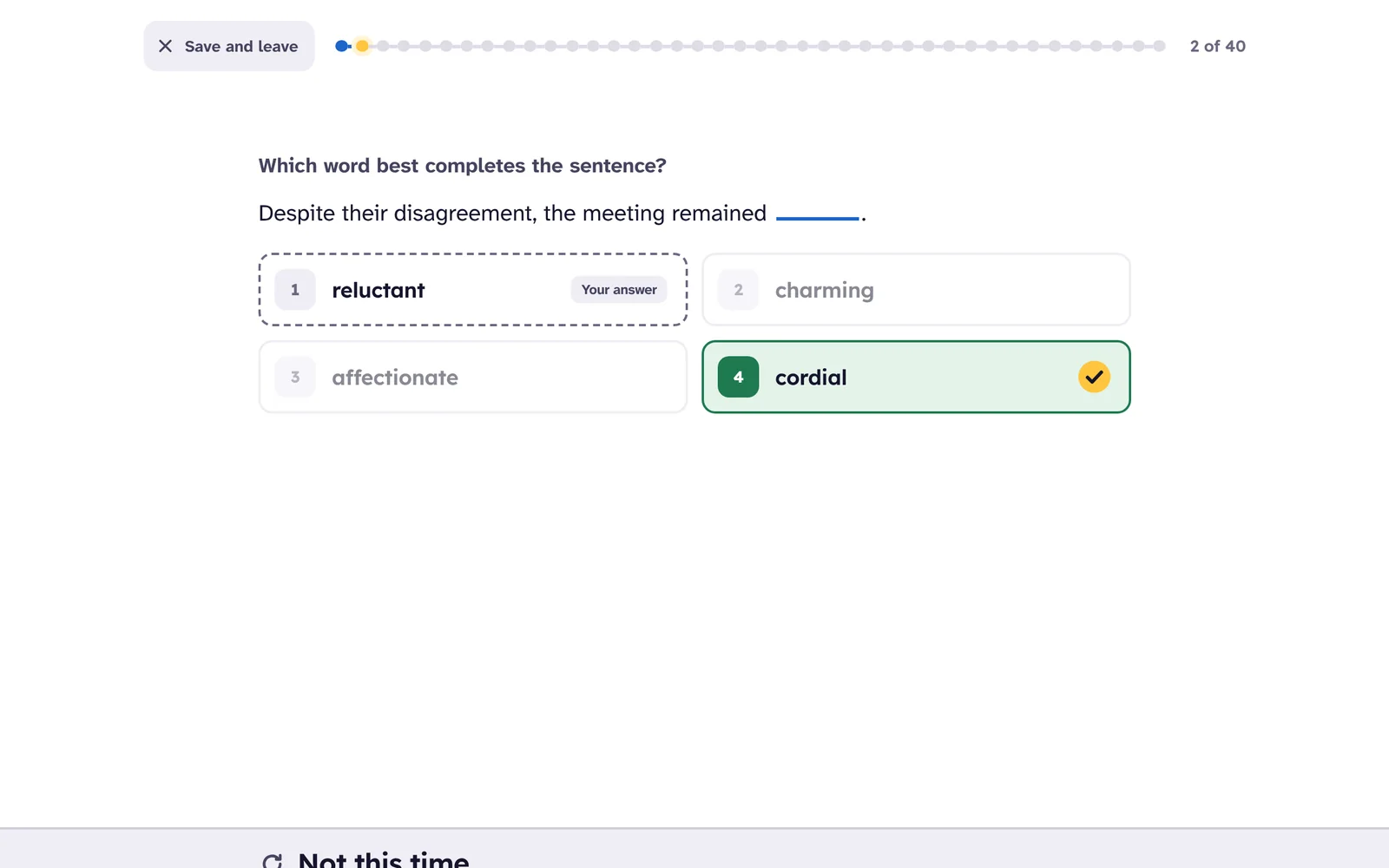
- Thirteen kinds of question. Tap the picture, hear and choose, fill the blank, tell apart two words that get mixed up, synonyms and antonyms, word parts, matching, typing the word, writing a sentence, and reading a short passage.
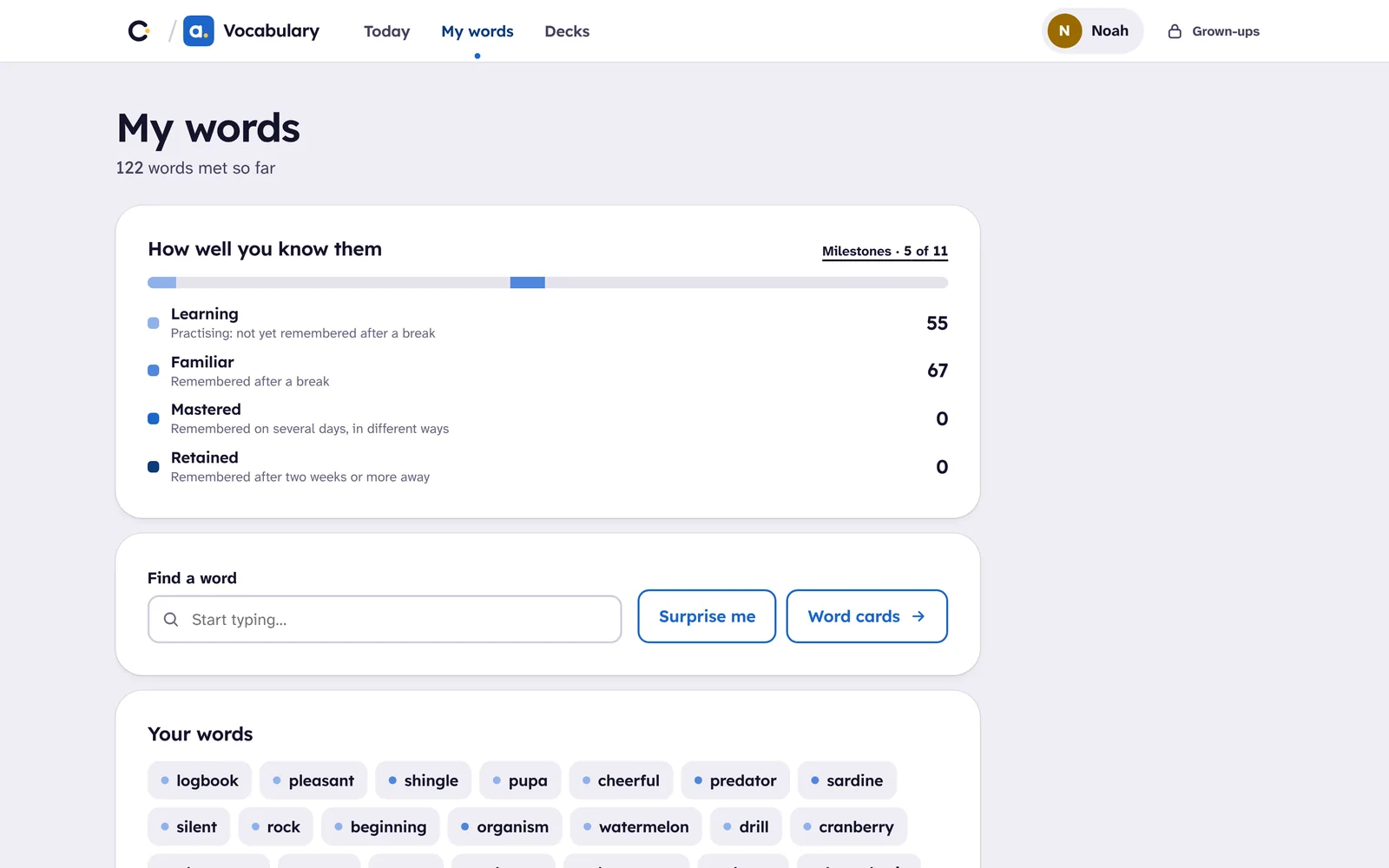
- A short placement finds the starting point, then each day blends new words, review and practice on the tricky ones. Words move from introduced to learning, familiar, mastered and retained as they are remembered across days and weeks.
- No timers, no streaks to protect, no leaderboards. A wrong answer gets the right one and an example, and there is always “I don’t know yet”.
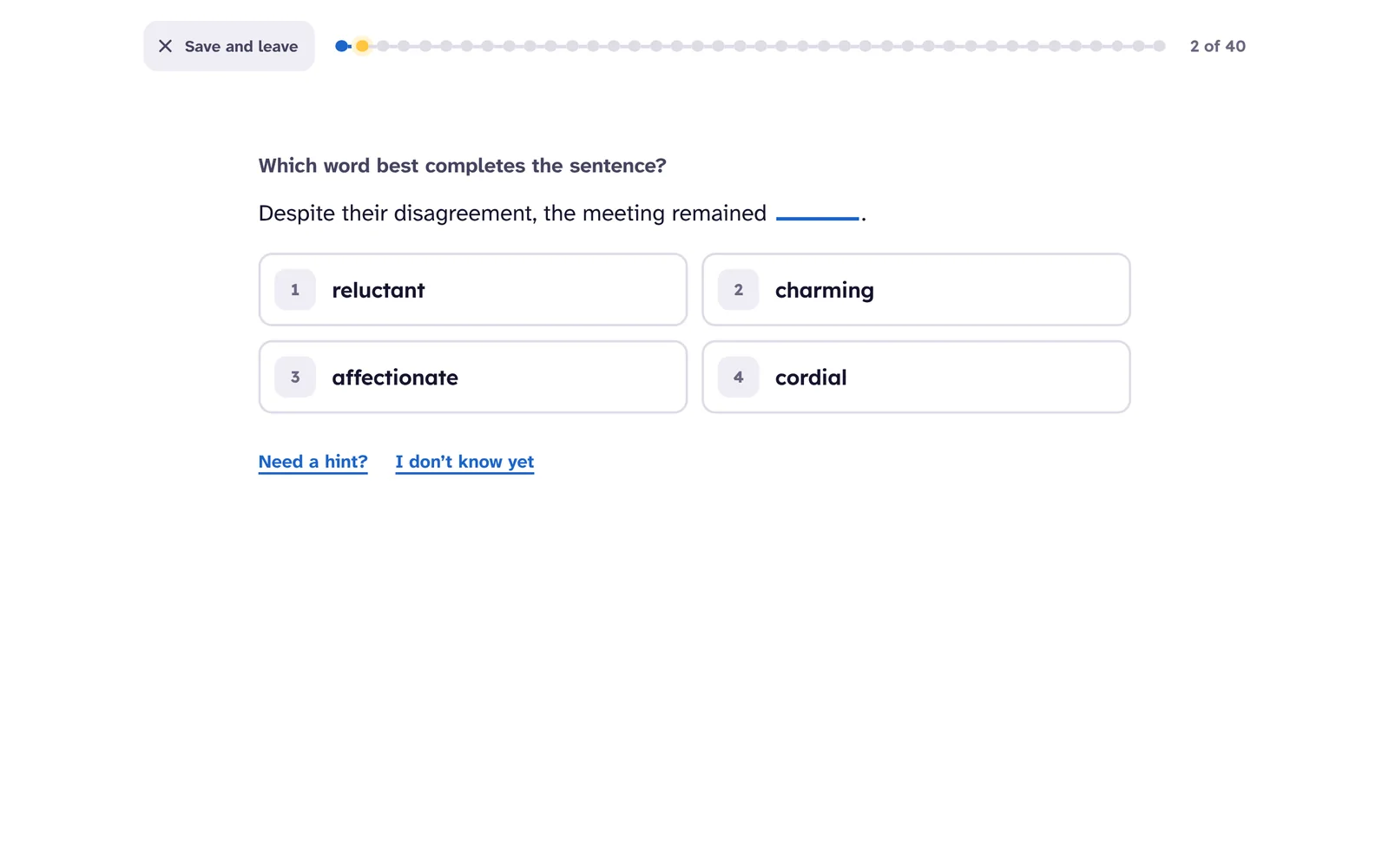
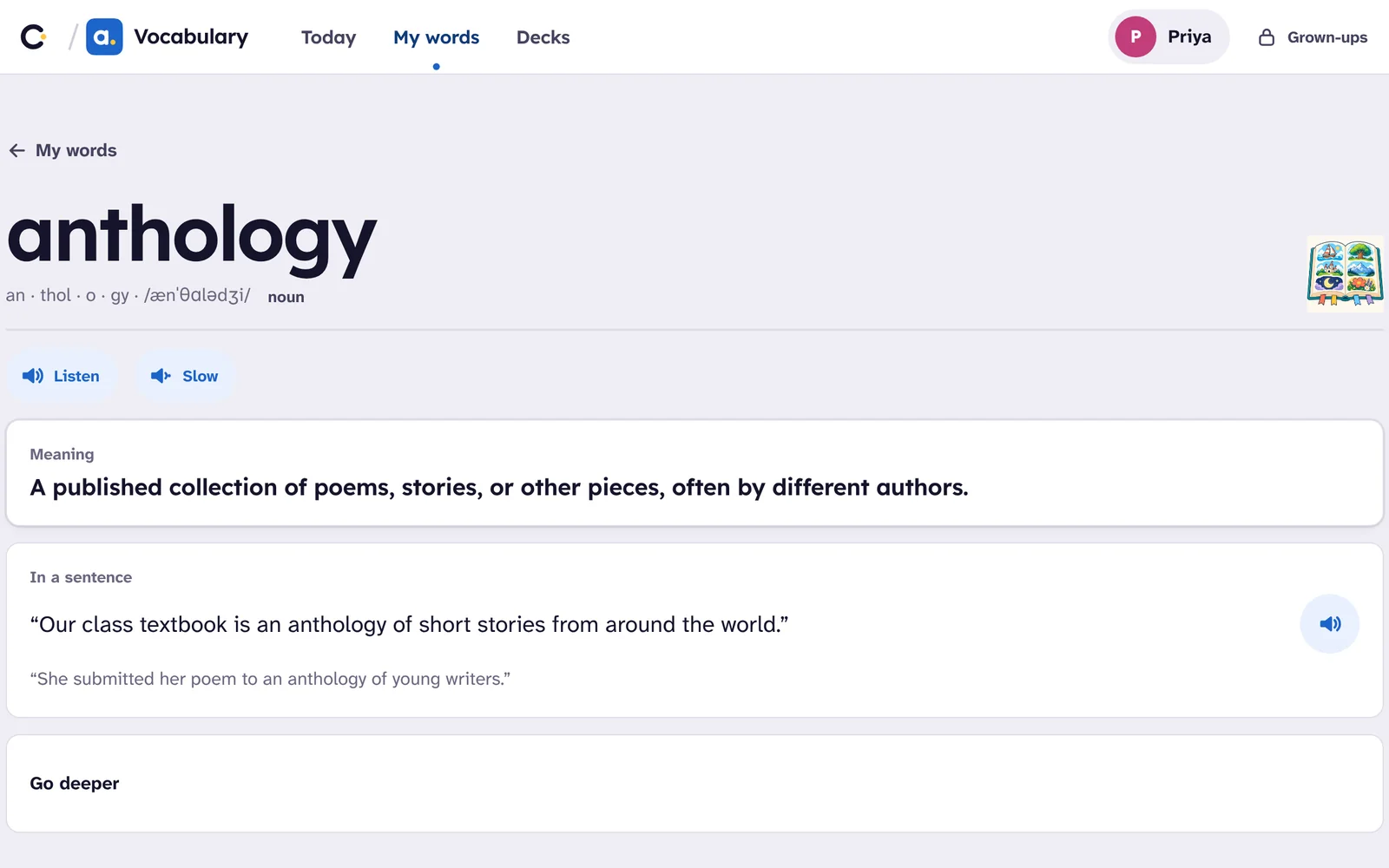
How it teaches
Understanding before the quiz. A new word is met on its card first: picture, sound, meaning, sentence. The youngest see a picture and hear the word; older students meet word parts, shades of meaning and the word in a passage.
Today’s journey. About six minutes for the youngest, twelve for elementary school, eighteen for teenagers, and adjustable: a few new words, the words due for review, and extra practice on the ones that were missed. The mix is roughly half review, a third new.
Review just in time. Each word is scheduled on its own, with a spacing model that aims to bring a word back shortly before it would be forgotten. A word counts as mastered once it has been remembered across several sessions and kinds of question, and as retained once it survives two weeks or more.
A level with honest uncertainty. The Cylin Vocabulary Level is estimated only from the first, unaided time a child meets a word, and is always shown with its range and how sure it is. It is not a grade level, and we don’t present it as one.
Questions
What ages is it for?
Four to eighteen. The same app serves a child who is learning to read and a teenager preparing for exams; the starting point, the session length and the kinds of question change with the child.
Where do the words come from?
The 10,090 words are organized in eight levels by how early they are usually learned and how often they appear in print. Definitions and sentences were drafted with AI tools, then audited and corrected, and we keep auditing them. If you spot one that reads wrong, tell us and we’ll fix it for everyone.
Does every word have a picture?
No. Pictures are made for words a picture can show, mostly the earlier levels, and each is approved by a person before a child sees it. Every word has its meaning, sentences and sound.
Does it work on a phone?
Yes, and on a tablet or computer; progress follows the child through the family account, and a session finished offline is sent when the device is back online.
Was this app called Lexcursion?
Yes. New name and new address; the old one still brings you here. Your children’s progress is all still there.
What parents see
In the app’s parent area, behind your Cylin parent PIN: the child’s level with its range, words remembered after a break, words still learning, how many of the last seven days were practiced, a growth chart over time, a profile across six skill areas, and “What we notice”, with ideas for practicing together.
In Cylin Hub, beside the other subjects: words remembered after a break and the change this week, words mastered and retained, and up to five words worth a look. Nothing a child typed is ever stored or shown.
 Cylin Hub
 Phonics
 Vocabulary · Priya
- Mastered538
- Retained two weeks or more431
- Still learning47
Worth a look
From first sounds to the SAT
Phonics teaches a child to read, one sound at a time. Vocabulary carries on from there for years, through more than 10,000 words. One family account opens both.
 PhonicsAges 3–9
- VocabularyAges 4–18You’re here